Tag Archives: 4 stars

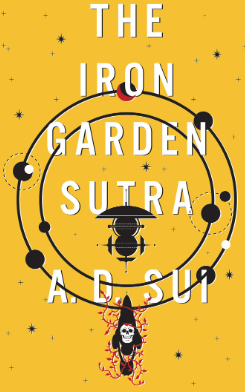
The Iron Garden Sutra by A.D. Sui

Amazon link (sponsored)

Stars: 4 out of 5

I didn’t quite know what to expect when I picked up this book. I was surprised to find a “murder ship” story with a strong element of cosmic horror. I also didn’t expect to enjoy Iris and his AI companion as much as I did.

Iris and his AI companion are definitely the highlight of the book. They are a fascinating duo—two separate consciousnesses sharing a single mind. They bicker and can even hurt each other at times, but they also genuinely care about one another’s well-being. As you learn more about their relationship, it becomes increasingly compelling and easy to appreciate.

The deeper I learned about Iris’s trauma, the more I empathized with him. He constantly strives to be useful, to do the right thing, yet he feels he is never quite enough—that he is falling short of what it means to be a Vessel. I was glad to see him eventually find some measure of peace, even though it comes after a series of difficult and painful events.

I wasn’t as engaged with the other characters, as they are less developed and often feel like expendable background figures. I found it difficult to distinguish between the students for much of the book. They are mostly portrayed as frightened and helpless, with others trying to protect them, but they lack distinct identities.

In terms of the story, it’s a strong example of cosmic horror combined with claustrophobic suspense. A group of people explores a derelict generation ship, only to discover that the ship is not as lifeless as it appears—and that it poses a deadly threat.

The book also explores interesting ideas about what it means to be alive versus simply aware, along with a thoughtful perspective on the relationship between humans and artificial intelligence.

Overall, I thoroughly enjoyed the story and am looking forward to the next installment, especially since the ending leaves things on a cliffhanger.

PS: My thanks to NetGalley for my advanced reader copy.

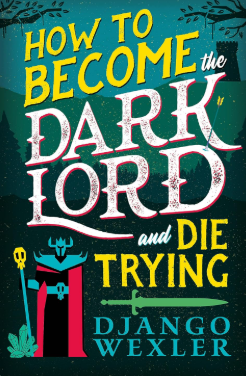
How to Become the Dark Lord and Die Trying (Dark Lord Davi 1) by Django Wexler

Amazon link (sponsored)

Stars: 4 out of 5

I must admit that I wasn’t particularly enamoured with this novel in the beginning, because I couldn’t figure out the direction the author was taking it. Was it supposed to be satire or humor like Terry Pratchett’s Discworld series? It had too many dark vibes for that. It was creating a weird dissonance in my brain. But once I got past the first few chapters and decided to go with the flow and see where the story took me, I enjoyed the journey quite a lot.

I think the biggest reason why it took me a while to warm up towards this book is Davi herself. She has a rather cavalier attitude towards life and death, especially her own. But she is also very quick to kill and maim others because she believes that once she dies and resets to the beginning, everyone will reset with her, so none of this is real.

I understand where this attitude is coming from. If you spent a thousand years dying horribly over and over again, and watching people you get attached to die no matter what you do, you either go insane or stop taking anything seriously. And I think that Davi is a bit insane by this point. Thinking that this is all just like a video game, where she can just reset to the beginning if it doesn’t work out, is her way of coping with the horrors of the situation.

And I love the fact that the further she progresses in her attempt to become the Dark Lord, the more she gets invested in the lives and well-being of her companions. And that when a certain event happens that causes a reset, she comes to the realization that her actions have consequences. That everyone who died until now will stay dead, and it’s her fault. The sheer moment of panic she had after that was very relatable.

I also loved most of the supporting characters, and even some of the villains are pretty interesting and multidimensional. The world is also fascinating. I really want to know who built the ruins where the Convocation takes place. They look a lot more advanced than anything either the humans or the wilders of this world would be capable of now.

I am not a fan of cliffhanger endings, but I can accept it in this case. After all, Davi accomplished the objective she set for herself at the beginning of the book. I am willing to wait until the next book to find out where the story takes her afterwards.

PS: My thanks to NetGalley for providing me with a review copy.

Platform Decay (The Murderbot Diaries 8) by Martha Wells

Amazon link (sponsored)

Stars: 4 out of 5

Murderbot is back! And his risk assessment module is repaired and functioning better than in the last book. He even added an emotional check subroutine on it, and let me tell you, the results of that check are often hilarious.

Here we have Murderbot at his best – when he is in charge and trying to extricate humans out of tricky situations while pretending that he doesn’t really care about them. But we all know that he is a big mush under that gruff exterior, and that he absolutely cares about his humans.

Murderbot has a plan (well, the bare bones of one at least), but that plan goes out of the window as soon as he enters the taurus anyway. Shenanigans happen, with lots of snark from our favorite SecUnit, and I loved every minute of it.

We get to meet DR Mensah’s extended family, including one of her spouses and her daughter. Sofi is an amazing character, but I loved Granma the most. Also, it’s hilarious how awkward Bot is with children, but how good he is with them as well. No matter how much he gripes about it, it’s like he senses when little humans need him to be there for them, even if it’s just a strong hand to hold on to when the world around is scary.

Oh, and Three freeing other SecUnits with Murderbot 2.0 code, and the rogue SecUnit panic that spreads through the taurus is rather funny to read about. Especially Bot’s reaction when one of those units tried to interfere with the rescue of his humans.

My only complaint about this book is that once again, we get very little of ART and Bot interactions. I miss ART. I want them exploring the galaxy together, watching soap operas and being hilariously snarky about the humans they have to deal with.

PS: My thanks to NetGalley for providing me with an advanced review copy.

City of Last Chances (The Tyrant Philosophers 1) by Adrian Tchaikovsky

Amazon link (sponsored)

Stars: 4 out of 5

This is the first fantasy book that I have read by this prolific author. I liked one of his sci-fi series (The Final Architecture) and bounced off another one (Children of Time). So I was open to giving another one of his books a go.

All in all, I really liked it. The author has a knack for creating interesting worlds that you want to explore and learn more about. In our case, the city of Ilmar is interesting to discover, but not a place I will ever want to visit. It’s old and crumbling in some places, with layers of history and tragedy built upon each other. 

It’s a weird place where grand mansions coexist with factories straight out of the industrial revolution (only powered by demons instead of coal). Where a mysterious Wood can be a small corpse of trees one moment, and a passage to other worlds when the moon hits it just right. Where a curse can jump from the person being executed to the executioner. Where the old nobility, massacred a hundred years ago, still snares anyone who enters their domain to re-enact their jousts and dances until they die of starvation.

You could almost (but only almost) pity the Pals who are trying to impose their order and Correct Thought doctrine on this city that rejects any kind of order or classification. It’s a broken place where magic leaks from the cracks, and hope is a small ray of sunshine almost swallowed by the clouds of despair. Even the escape through the Wood isn’t easy and is a guaranteed death sentence without proper protection.

While I was fascinated by Ilmar, I was less enthused with the characters that we got to follow throughout the book. There are several POVs, so the story meanders seemingly aimlessly for a good chunk of the book. I would even argue that some of the POVs were rather superfluous and could have been cut out without much damage to the story, which would have made the book slightly shorter and easier to read.

Don’t look for heroes in this book. There are none, even if some of the characters consider themselves as such, at least in the beginning, before the harsh reality of Ilmar slaps them in the face. These are deeply flawed people who are doing sometimes horrible things, and sometimes good things, but purely for selfish reasons. Everyone likes to talk big about liberating Ilmar and chasing the Pals out, but it’s always about who will profit from that revolution. 

So if you like your protagonists clearly on the side of good and your villains truly evil, then this is probably not a book for you. These characters are flawed people. Sometimes pitiful, sometimes horrible, but always very human. 

My only complaint is that this world feels rather hopeless. Horrible things happen, then even more horrible things follow. There is no happy ending, just an ending to this particular nastiness. Some antagonists get what they deserve, but most don’t. Also, Ilmar is back to the status quo with nothing gained on either side.

All in all, I don’t mind revisiting this world again, so I will definitely pick up the next book in the series.

PS: I received an advanced copy via NetGalley in exchange for an honest review.

An End to Potential by Emily Swiers

Stars: 4 out of 5

This was a surprisingly good read, even though it turned out to be a completely different story from what I had expected when I started reading this book.

Yes, this is a quest and a mystery to unravel, but more than that, this story is about coping with trauma and piecing together tattered bits of yourself in the hopes of becoming a better (and healthier) person.

I admit that I didn’t particularly like Kana at first. She seemed like the typical spoiled rich brat who always gets her way without even once stopping to consider the lives she wrecks in the process. And admittedly, she is all that, but there is also so much more that meets the eye. Frankly, with all the abuse and trauma she’s been through in her short life, I’m surprised she isn’t a raving lunatic most of the time.

The further I read into this book, the more I came to sympathize with her. Yes, she is capricious and always wants to have her way. Yes, she can be cruel and has a total disregard for the safety and well-being of others. But would you blame her? She learned from a young age that a nanny could kidnap you or sell you to kidnappers. The bodyguard assigned to you might be the one handing you over to people with a grudge against your mother. The doctors who treated your injuries would turn around and sell your medical records to the press to turn a quick profit. No wonder she is paranoid and doesn’t trust anyone. Or have any friends or romantic interests.

The story itself is a bit convoluted with a lot of flashbacks that, though useful to paint the picture of Kana’s life, sometimes bog the narrative down. It felt like it dragged at times. Also, some of those flashbacks raise more questions than they provide answers. Like the postcard referenced at the very beginning of the story. What was that about? And the incident that left Kana disfigured. It’s mentioned in the beginning, but never expanded upon. Why talk about it if it doesn’t have any impact on the story?

My other issue is with Bexley. Who is she? Kana treats her like a close friend during that one phone call at the beginning of the book, yet Bexley isn’t present in any of her other recollections of her childhood or teenage years. She isn’t mentioned at all for most of the book, apart from one other time. What are her ties to Kana and the Amobrose family? Why is she in California and not wanting to come back? The lack of any mention of her in Kana’s past makes her seem like a figment of Kana’s imagination rather than a real person.

The other question that is left unanswered is why Rabid Sinthies were attracted to Kana. What makes her so special? There are hints to it, but nothing is fully explained. 

All in all, I really liked this book, and I am looking forward to reading more books by this author. And if there is a sequel, I will definitely pick it up.

PS: I received an advanced copy of this book via NetGalley in exchange for an honest review.

We are Legion (We Are Bob) (Bobiverse 1) by Dennis E. Taylor

Amazon link (sponsored)

Stars: 4 out of 5

This was a rather unique premise for a story. At least, I haven’t encountered this kind of story before. I have read plenty of books about real AI and sentient starships, but not one where the digitalized consciousness of a real person is put into a starship. 

The world in which this story takes place is a rather bleak one, and I would really hope that humanity can do better. Though, judging by everything happening around the world right now, I might be giving our race too much credit. I think humanity has an infinite potential for self-destruction. Unfortunately, I can very well see humanity going into an all-out nuclear war just to prevent a nation from sending out a probe ahead of others. It’s not science fiction anymore, it’s a fact of life.

Fortunately, Bob is a very endearing character who brings much-needed levity to what otherwise would be a very depressing book. His positive outlook and curiosity are what made this book fun. All the problems he encounters don’t discourage him at all. He approaches them as challenges to overcome. In that sense, this book reminded me of The Martian and Project Hail Mary by Andy Weir. The protagonist has the same vibe – ready to McGiver his way out of any situation. 

Granted, it feels like some of the problems Bob faces are non-problems at all, because he overcomes them so easily. I understand that this is a world 100 years into the future, but some of the technological advances seem implausible with the state of science and technology we are at now. Unless there are some significant breakthroughs in the next 100 years, and a lot more money is invested into research. It’s even less plausible in a country that reverted to fundamentalist Christianity like FAITH. 

But the story is engaging enough that I was willing to overlook the parts that stretched my disbelief a little too much. I was invested in the exploration of every star system the new Bobs go into. Heck, I was on the edge of my seat during the first contact story and the migration Bot initiated with the Deltans. 

My only issue, and the reason this book didn’t get 5 stars, is that it ends on a cliffhanger. None of the story arcs were brought to a satisfying conclusion, but just left in media res, to be picked up in the next book. 

PS: I received an advanced copy of this book via NetGalley in exchange for an honest review.

Empire of Silence (The Sun Eater 1) by Christopher Ruocchio

Amazon link (sponsored)

Stars: 4 out of 5

This is a promising start to what shapes up to be a very interesting series.

The worldbuilding is very detailed, and the hints we see at a larger universe are very enticing. You can really believe there is a galaxy-spanning empire somewhere beyond the little planetary system where the story takes place. And not just the Old Earth empire that Hadrian was born into, but the other political forces as well. We meet representatives of some of them in this book, and I am looking forward to seeing more in the next books.

I liked Hadrian as the protagonist, even though he was a bit annoying in his whininess sometimes. But at least he was self-aware of that particular trait of character and even self-depricating sometimes. And I mean, as far as a coming-of-age story goes, the universe sure threw him a few curveballs, so a little bit of self-pity is justified.

I was surprised at just how bleak this world is. It’s a rigidly stratified society where your status and just how good a life you will lead depend on your genetic code. If you were born into an aristocratic house, you would live a life of luxury that many dream of… But even then, even nobile houses are but pawns to the empire and the Chantry that controls all technological advances. I mean, even the nobile children are conceived in vats, their genes carefully selected and edited by the Chantry.

The Chantry has absolute power in the Empire, because it can simply refuse procreation privileges to a noble house and effectively eliminate that house in a generation or two. Or they can declare them heretics and glass the whole planet from orbit with weapons and technologies only they possess.

And the commoners? Well, they live in abject poverty, at least on the two planets Hadrian visited in this book. No genetic modifications for them, or even advanced medical practices. Just hard work, servitude, and blood sports.

Honestly, by the end of this book, I wasn’t sure if I was rooting for humans or for their alien enemies to eliminate them. And the jury is still out on that one.

But all in all, I am excited about continuing this series in the next book.

Ghost Detective (Myron Vale Investigations 1) by Scott William

Amazon Link (sponsored)

Stars: 4 out of 5

This was a surprisingly good book, though not what I expected when I started reading it. I mean, it’s classified as a mystery book, and even though yes, we have a private detective investigating a possible murder, the book isn’t really about that.

This book is about human connections and ties that bound. About love and hate, and everything in between that can spark between two people and can often transcend death. It’s about how we often hurt the people we love, or stay in a toxic relationship because we still love the person hurting us.

I was actually surprised at how much I liked Myron Vale, our protagonist. If you think about it, his life is a bit of a nightmare. He can see ghosts… all of them… all the time. Not only can he see them, but he can also hear them, and smell them, but he can’t touch them. But more importantly, he can’t tell the difference between the dead and the living. To him, they all feel real. The only way for him to differentiate the living from the dead is to touch them. And touching strangers is kind of frowned upon in our society.

I could understand the depth of despair he descends into after the shooting when he realizes that his not being able to differentiate between the living and the ghosts means he can’t do his job as a police detective anymore. When he can’t tell which treat is real and which is just a ghost, he can’t react quickly and efficiently. Worse, he can put his partner in danger.

I wasn’t particularly fond of Billie, but the more I learned about their relationship, the better I understood her as well. Theirs is the perfect example of a love that has turned toxic, but neither is willing to end the torment. In a way, I’m glad about her decision in the end.

The murder mystery case that Myron is paid to investigate in this book isn’t really all that interesting or mysterious, but it was never the emphasis of this book, just a vehicle for the story.

I do have some questions though. Like why did the priest want Myron to drop the case? Why did he imply that if he followed through with it, some entities in the ghost world might consider him a threat and might even eliminate him? This is never brought up again. Maybe this will become important in the following books in the series, and I think I will check out book 2.

The Ruin of Angels (Craft Sequence 6) by Max Gladstone

Amazon Link ( sponsored)

Stars: 4 out of 5

I love coming back to this world. It’s so rich and complex, and every book shows us a new facet of it. I feel like each book gives me more puzzle pieces to a giant picture that I’m assembling by reading the series.

In this book, we reconnect with Kai from Five Fathoms Deep, and she is away from her island in a city she doesn’t understand or particularly like, trying to help her estranged sister. Well, first Kai reluctantly meets with her sister and refuses to help her, but then she spends the rest of the book trying to rectify that error.  I missed Kai. She is a very good character. She isn’t a Craftswoman, she doesn’t have much personal power. She is a priestess to idols made by men from scratch to store their soul stuff in. And very recently a real priestess to a new Goddess. She is out of her depth in this strange and broken city where the God Wars started, and where the first Craftsman is still frozen in time, dying but not dead, tearing the world apart. 

I loved this city. Both the Alikand that was lovingly preserved in the books and stories of its citizens and the broken Dead City where the war was still being fought in infinity, with both sides endlessly dying but not quite dead. And the strange order of the squid city that was so foreign to both the other cities, but was necessary to keep the wound of the Dead City from destroying the rest of the world. I am happy that Kai found a solution that preserved Alikand in the end.

I have one issue with this book – it dragged a little bit in the beginning when the heist of the train was being organized. We spent too much time with Kai’s sister, and I didn’t particularly like her as a person. Yes, I understood her motivations by the end of the book, and I could even sympathize, but I still think she could have handled all of this better if she stepped on her pride and asked for help, instead of trying to play everyone around her. You could argue that she caused most of the problems she worked so hard to solve afterward.

I was happy to see Tara again since she is by far my favorite character in the series, but she doesn’t play a very big role here. She helped where she could, but was mostly relegated to the background. Which I understand. This is Kai’s book. And the Blue Lady’s, because she finally came into her full powers here. The Goddess of thieves and street children, and lost and forgotten people, the fleeing, the downtrodden. The one who ate the Wastes. 

What I love the most about this series is that despite some horrible things that happen to the characters in the books, there is always a hopeful note in the end. Kai and her sister finally make peace, and the poppy fields around Alikand are blooming once more.

Onward to the next book in the series.

Poison by Chris Wooding

Amazon (sposored link)

Stars: 4 out of 5.

I admit that this story turned out differently than I expected. Not that I complain, mind you. I was expecting a fairy tale retelling with a YA vibe with a usually annoying protagonist who knows everything better than the adults around her. Who never listens to anyone else, yet somehow is rewarded for it. Oh and yes, who is always right. 

What I got instead is a much darker and more subtile story, and a reflection about fate, predetermination, and freedom of choice. Are we really the masters of our destiny, or are we merely stories written by a superior being somewhere? Whether you call him or her God, creator, Hierophant, it doesn’t matter. That is a very deep issue to ponder, but don’t worry, the book isn’t heavy on existential angst. This is a fairy tale, after all. 

I was not particularly fond of Poison in the beginning, because she came across exactly like the YA protagonist I described in the first paragraph of this review – sullen, stubborn, thinking that she always knew everything better than the adults. I grew to appreciate her as the book progressed though. That deep sense of not belonging where you live, of being a stranger even to your family, that’s… sad, but also very human. There have been times when I felt that way as well. And that sullen stubborness is what pushed Poison to keep on going, to keep on fighting even when the odd seemed overwhelming, or the horrors to face were too much. 

I liked the side characters as well, even if they don’t get nearly as much attention as Poison does. But Fleet, Bram and Peppercorn are fun characters to follow. And there is a very intelligent cat in this story, which automatically adds an extra star from me because cats are awesome. 

And even though the story turned a bit meta for my taste at one point, I loved the (logical) ending of this. It made sense, and it was right, and I will not say another word about it not to spoil anything.