Category Archives: Horror

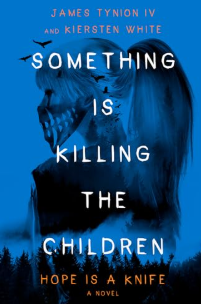
Something Is Killing the Children: Hope Is a Knife by James Tynion IV, Kiersten White

Amazon link (sponsored)

Stars: 3 out of 5

I read the Something is Killing the Children comic books, and I was fascinated by the violent and gory world James Tynion IV created. It’s brutal and unforgiving, and our main character, Erica Slaughter, has to be just as brutal and unflinching. The comic books are truly the story of a monster hunting other monsters.

I was intrigued to see how a full-length novel would tackle this world and the character of Erica herself. And the answer is… eh, it’s fine, I guess.

Don’t get me wrong, all the ingredients of a good Something is Killing the Children are there – a small town down on its luck, with the typical small-town mentality and cliquishness. Everyone has skeletons in their closet. And yes, something is killing the children. And Erica is there to discover what it is, which child is causing it, and stop it once and for all.

The problem is that all of this has a lot less impact than the comics did. Yes, the ingredients are there, but the story itself feels half-baked. Like maybe the proportions were wrong, so the result looks like it should, but doesn’t quite taste right.

A lot of the plot points are a bit on the nose – the only rational and “good” family in town are people of color, and they are ostracized for it. The zealot priest with an almost cult-like following who turns out to be a sh!t human being in the end. His most devoted follower suddenly comes to Jesus and sees the error of her ways (not to mention how much of a scumbag the guy is) after worshiping the ground he walked on for most of the book. I mean, she literally turned from believing everything he said and deferring to him to actively opposing him in less than a chapter. As I said, a little bit too on the nose.

My biggest disappointment, though, is how Erica is portrayed in this book. In the comic books, she can be impulsive and brash, and she tends to run headfirst into danger, but she isn’t stupid. She has a pretty good head on her shoulders and good observation and deduction skills.

Here, she jumps to conclusions immediately after getting into town and seems to dismiss anything that would go against her initial theory. She literally can’t see the stuff that is staring her in the face. Seriously, I guessed who was summoning the monster almost from the first chapter she was introduced in, so why did the experienced monster hunter not pick up on all the clues faster?

Erica simply didn’t feel like the character from the comics. She felt more like a mimic wearing Erica Slaughter’s skin – she looked the part, but you couldn’t help but feel a sense of unease the more you read about her.

All in all, it was an okay story, but I would highly recommend starting with the comic books if you are unfamiliar with this universe.

PS: My thanks to NetGalley for my free copy.

Dive Bar at the End of the Road by Kelley Armstrong

Amazon link (sponsored)

Stars: 3.5 out of 5

October is the best time for spooky horror, and there is nothing spookier than getting stranded in the middle of nowhere on a rainy night, with your car disabled and no phone service. Yet that’s exactly the situation Ellie, Henry, and a few other strangers find themselves in. At first, finding an open dive bar with a strangely friendly bartender and a silent, solitary guest feels like a blessing, or at least a reprieve from the elements, but nothing is as it seems. There are monsters lurking in the trees, and isn’t that bartender a little bit too friendly?

Even though the book features POVs from several different characters, I might argue that Ellie is the main protagonist in this story, and her POV is the only one written in the first person, while everyone else is third person. We also learn a lot more about her past than we do about the other characters. Well, we learn a bit more about Henry, but almost nothing about the old man who gets killed by a rabid dog. In fact, I’m still a bit puzzled about his inclusion in this story. It almost seems like his ordeal was written for pure shock value for Ellie and Henry, which does him a big disservice.

I would say that the lack of attention given to the characters other than Ellie and, to a lesser degree Henry, made me dock a star off my rating. As I already mentioned, the old man is barely a footnote in the story. The young couple is a bit more fleshed out, while the gay stockbroker is a walking caricature of a narcissist. Just from seeing the lack of depth to their characterizations, I could predict who would survive to the end of the book and who wouldn’t, which killed part of the suspense for me.

All in all, I liked the premise behind the story and the reason why all these characters ended up in that car pile-up on a rainy road, and subsequently in the dive bar. It’s one messed-up situation, which made me hate the bartender even more. Just the idea that the woods outside of the bar would show you your biggest fear is… well, terrifying. And I will not go into any more details because I don’t want to spoil the book.

I had fun reading this story, and I rooted for the characters to survive and break out of this vicious little pocket universe. I will definitely recommend this as a spooky read for a spooky season. Oh, and think twice before taking an unfamiliar road at night.

PS: My thanks to NetGalley for my review copy.

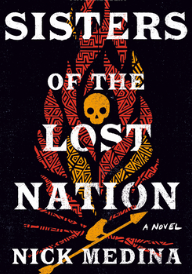
Sisters of the Lost Nation by Nick Medina

Amazon link (sponsored)

3.5 out of 5 stars

I liked this book less than Indian Burial Ground. From what I understand, Sisters of the Lost Nation was actually published first. I can say that the writing quality improved a lot between the two books.

This book shines a light on a very hard issue of addiction, exploitation, and lack of resources that Native Americans face in this country. People can get hurt or killed on the rez, and the law enforcement in the next town over would just shrug and do the bare minimum. Women and girls go missing, and nobody even pretends to make an effort to find them. It’s hard to read about, especially considering that even though the Indigenous tribe in this book is fictional, the issues are very much real.

The story itself, though… well, let’s just say that it took me a very long time to get into it. I think the author’s choice to jumble the timeline was a mistake. We are just getting to know Anna and her sister, as well as the other characters, and we jump from Day 30 to Day 4, back to Day 15, etc., in the first few chapters. This creates confusion.

More importantly, it makes Anna feel neurotic, because the Anna on Day 4 behaves completely differently than the Anna on the day Grace goes missing. Yet they are literally in back-to-back chapters. I couldn’t paint a clear image of who Anna actually is and what makes her tick until the timeline finally streamlined. And I admit that I didn’t like Anna very much until then either. And most of it was due to the time jumps back and forth and all over the timeline.

I also wasn’t particularly impressed with the ending. I felt like the author very much wanted to have a happy ending to this rather bleak story, but it felt forced rather than earned. In my opinion, a more realistic ending would have given this story an even bigger impact.

PS: My thanks to NetGalley for my review copy.

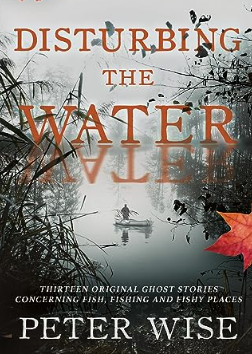
Disturbing the Water by Peter Wise

Amazon link (sponsored)

Stars: 4 out of 5

This was a solid anthology of short stories centered around fishing and strange things that avid anglers sometimes encounter along the desolate stretches of the rivers and lakes they spend so much time by. It was a good palate cleanser between longer novels I was reading.

Sometimes you catch the elusive big one… sometimes you bring up something unsettling instead. And sometimes something otherworldly observes you cast your line and can take offence to how you treat the fish and the waters. And once it takes offence, well, sometimes you don’t come back home.

As I mentioned, the stories are short and a good distraction when wanting to read something quick or needing a break from a longer novel. However, none of them are particularly memorable or actually scary. They didn’t hold my interest as much as some other anthologies I read before, maybe because I am not an angler. In fact, I don’t think I ever held a fishing rod or cast a line in my life. I’m sure people who love fishing will derive more pleasure from these short stories than I did.

PS: My thanks to NetGalley for sending me a review copy.

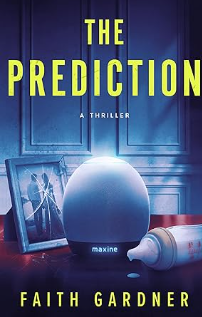
The Prediction (The Jolvix Episodes 1) by Faith Gardner

Amazon link (sponsored)

Stars: 2.5 out of 5.

I was excited to read this book, but ultimately came away disappointed. My biggest issue was that I didn’t like any of the characters. Nearly everyone felt awful, selfish, and deeply self-centered, which made it difficult to become invested in their struggles or relationships.

Unfortunately, that included Rowena, our protagonist and the person we’re clearly meant to empathize with. While it’s undeniable that she is being gaslighted by her husband and subjected to subtle emotional abuse, I still found her frustratingly difficult to root for.

Rowena is painfully aware of her anxiety, depression, and extreme clinginess, yet she seems unwilling to take any meaningful steps toward helping herself. Instead, she passively accepts whatever her husband tells her to do—take this medication, see this psychiatrist, follow this advice—without ever questioning it or seeking independent help. I found it hard to believe that someone who had lived in California for six months hadn’t made any effort to establish her own support network, find a primary care doctor, or even choose her own therapist.

What bothered me most was the contradiction in her behavior. For much of the novel, she drifts through life in an almost helpless state, blindly following her husband’s lead. Yet whenever she discovers one of his lies, she swings to the opposite extreme, becoming intensely paranoid, suspicious, and vindictive. Rather than making her feel complex, these shifts made her feel inconsistent and difficult to understand.

My other issue with Rowena was her relationship with Sara. Rowena repeatedly insists that she loves her husband, but she seems immediately captivated by Sara almost from the moment they meet. Given that both women are married, this felt strange to me, especially since Sara never appeared to show any interest in being anything more than a friend. This didn’t make me like Rowena any more.

While I sympathized with the situation she found herself in at the end—isolated and unable to turn to her mother or best friend for help because her husband had already convinced them that she was unstable, depressed, and suicidal—I could not support the decision she ultimately made. She committed a crime and took a life. Rather than facing the consequences of her actions, she chose to run away. What made that choice even more frustrating was that she did so on the advice of a machine that she knew had been designed with a built-in bias toward viewing her husband as a threat.


I’m also not convinced that the ending is as happy as it seems. On one hand, Rowena escapes punishment and gets to live freely with her daughter. On the other hand, she can never return home or reconnect with the friends she left behind. She has effectively abducted her child and is now living as a fugitive. Worse, she has placed herself entirely at the mercy of a machine whose guidance she unquestioningly follows. To me, that feels less like a happy ending and more like a nightmare masquerading as one.

On a side note, I am not sure why the author chose to change the title from Amen Maxine to The Prediction. The original title was attention-grabbing. The new name is just… meh.

PS: My thanks to NetGalley for providing me with a review copy.

What Waits in the Shadows by Wil Forbis

DNF at 25%

I am disappointed with this book. The summary really played this story up and got me excited to read it. I mean an actual monster in the closet that is real… with deadly consequences? Yes, please. The execution, however was severely lacking.

While I liked Lisa as a character well enough, I felt like she was a pushover for most of the story, at least to the point in the story where I stopped reading.

The supporting cast was even less effective. Her boyfriend begins as an unrealistically perfect partner before quickly revealing himself to be a jerk, while her supposed best friend is so absent from the story that her inclusion feels almost pointless.


Another major issue was the pacing. After a strong and genuinely creepy prologue, the supernatural elements take far too long to return. The lengthy setup moves at a sluggish pace and often borders on dull, making it difficult to stay invested.

I’ll also admit that stories centered on angels and demons rarely appeal to me, so that aspect significantly reduced my enjoyment. Had the summary mentioned those themes, I likely would have passed on the book altogether.

That being said, I saw other readers who enjoyed this book, so this is very much the case of this book not being the right fit for me.

PS: Big thanks to NetGalley for providing me with an advanced review copy.

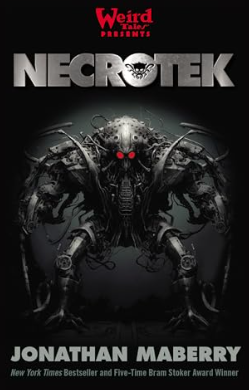
Necrotek by Jonathan Maberry

Amazon link (sponsored)

Stars 3.5 out of 5

This is the second book based on the Lovecraftian mythos that I’ve read this year, the first being A Plagued Sea by Kim Bo-young. Despite drawing from the same source material, the two books couldn’t be more different. One leans into existential horror, while this one is firmly in the military-action horror camp.

The book starts strong. A space station filled with military personnel, journalists, scientists, and representatives from various Earth religions gathers to witness the test of a new warpline gun. Naturally, the test goes horribly wrong.

I have to admit that the chapters covering the test and the immediate aftermath of Asphodel Station’s transport were genuinely chilling. Space, time, and even reality itself begin to warp and collapse, confronting people with horrors that are both real and born from their own minds. That’s nightmare fuel right there.

The first encounter with the shoggoth was also an edge-of-your-seat read. The action scenes throughout the book are well written, with plenty of tension and high stakes.

Unfortunately, the frequent info-dumps kill a lot of that momentum. I found my attention wandering, even during major action sequences, because they were constantly interrupted by exposition, existential crises, or “meaningful conversations.” The fight with the shoggoth vanguard is a good example—the action repeatedly stalls while Soren reflects on the Necrotek and wrestles with his doubts.

Speaking of necrotek, we have to wait until almost 80% of the book before that technology actually comes into play.

That said, I did like the characters. Soren tends to proselytize a bit more than I personally enjoy, but the cast is generally strong. I especially loved the Lost Souls and found myself rooting for them, even though a group with a name like that practically announces its fate from the beginning. Surprisingly, my favorite character ended up being Sybil. For an AI, she’s incredibly likeable. I also understood Lost’s desperation. It is the last survivor of a long-forgotten race, and the enemy they once fought has returned with a vengeance.

The ending clearly leaves the door open for a sequel, and I’ll probably pick it up. I just hope this book got most of the world-building out of the way so the next installment can focus a little more on action and a little less on exposition and philosophical reflection.

PS: Big thanks to NetGalley for providing me with an advanced copy.

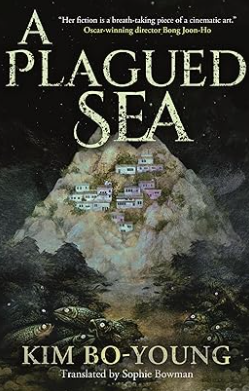
A Plagued Sea by Kim Bo-young

Amazon link (sponsored)

Stars: 4 out of 5

Lovecraftian existential horror meets the harsh realities of modern Korean culture, creating a compelling but deeply bleak story.

Despite its short length, this novella leaves a lasting impression. While I found it engaging and thought-provoking, it is undeniably dark and depressing.

One of the book’s strongest themes is its critique of modern Korean society, where beauty and wealth are often treated as measures of personal worth. Illness, disability, or physical differences are frequently viewed as personal shortcomings rather than circumstances beyond an individual’s control.

Against this backdrop, the government’s response to a village whose residents suddenly transform into grotesque monsters feels disturbingly believable. Rather than helping them, authorities quarantine the village and effectively abandon its inhabitants, leaving them to survive—or perish—on their own.

The protagonist, Mu-young, is a survivor carrying significant trauma and depression. She attempts to maintain order and a sense of control in an impossible situation, even though this means killing those who violate self-isolation rules. Although she is far from a likable character, her motivations are understandable, making her a complex and sympathetic figure.

My main criticism is the ending. I feel like it was rushed, with all the plot threads converging into a chaotic and messy conclusion. But that is to be expected for such a short novella. Overall, I enjoyed A Plagued Sea and would gladly read more of Kim Bo-young’s work if it becomes available in translation.

PS: My thanks to NetGalley for my advanced copy.

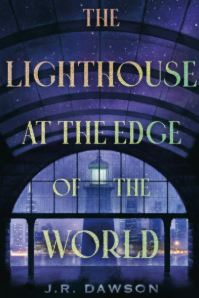
The Lighthouse at the Edge of the World by J. R. Dawson

Amazon link (sponsored)

Stars: 2 out of 5

This started so strongly, then puttered out somewhere around the midway point.

Mostly because the author didn’t quite know what story she wanted to tell. Was this a romance? A coming-of-age story? A story about grief and how different people deal with it? About the afterlife? Love and betrayal, and courage in the face of adversity?

I think the author wanted to include all of these themes, but didn’t manage to cover any of them in a meaningful manner in the end. It feels half-backed, with a meandering plot and underdeveloped characters.

I loved Nera, though. If this were her coming-of-age story, I would have been all for it. She is bright and alive, and I enjoyed discovering the world of the living with her, as well as getting to know the other souls at the station.

However, I couldn’t stand Charlie, so their romance was a lot harder to stomach. Yes, I know she is suffering, and has PTSD, and her family is all together shitty to her, but she still comes across as selfish and rather cruel.

And, I’m sorry, but her choice near the end of the book was so out of character even for her selfish self that it felt ridiculous. It happened only because the author needed to bring Harosen and his demon face-to-face again somehow. I would argue that there were better ways. He could have put Nera in danger while she was out in the city, and Harosen would have had to conquer his fear and step out into the world to save her. That would have been a great redemption arc for him, instead of whatever pathetic ending was written.

And while I love magical dogs and the idea of them being guides for the souls of the dead, the way they were written was… jarring, I guess? Their interactions with each other are surprisingly petty. I was more annoyed than endeared with them for most of the book.

And the ending was… underwhelming, to say the least. I also don’t particularly agree with the end of the Station. It served a purpose – it let some souls heal and rest before they were ready to cross over. Or to wait for their loved ones so that they didn’t cross alone. What happens to those souls now? Do they just get forcibly escorted to the veil, or are they stuck in a loop in Chicago until their time comes? Also, what about other cities? Do they have Veils like that as well?

There is a good story in there somewhere, but I think it would have benefited from a tighter plot and less purple prose. It’s also very heavy on feelings, often to the detriment of the story, especially when Charlie is concerned.

PS: My thanks to Netgalley for my review copy.

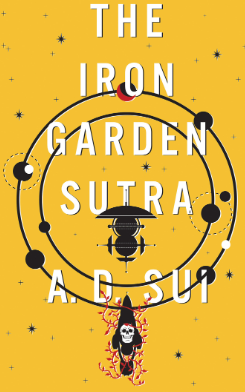
The Iron Garden Sutra by A.D. Sui

Amazon link (sponsored)

Stars: 4 out of 5

I didn’t quite know what to expect when I picked up this book. I was surprised to find a “murder ship” story with a strong element of cosmic horror. I also didn’t expect to enjoy Iris and his AI companion as much as I did.

Iris and his AI companion are definitely the highlight of the book. They are a fascinating duo—two separate consciousnesses sharing a single mind. They bicker and can even hurt each other at times, but they also genuinely care about one another’s well-being. As you learn more about their relationship, it becomes increasingly compelling and easy to appreciate.

The deeper I learned about Iris’s trauma, the more I empathized with him. He constantly strives to be useful, to do the right thing, yet he feels he is never quite enough—that he is falling short of what it means to be a Vessel. I was glad to see him eventually find some measure of peace, even though it comes after a series of difficult and painful events.

I wasn’t as engaged with the other characters, as they are less developed and often feel like expendable background figures. I found it difficult to distinguish between the students for much of the book. They are mostly portrayed as frightened and helpless, with others trying to protect them, but they lack distinct identities.

In terms of the story, it’s a strong example of cosmic horror combined with claustrophobic suspense. A group of people explores a derelict generation ship, only to discover that the ship is not as lifeless as it appears—and that it poses a deadly threat.

The book also explores interesting ideas about what it means to be alive versus simply aware, along with a thoughtful perspective on the relationship between humans and artificial intelligence.

Overall, I thoroughly enjoyed the story and am looking forward to the next installment, especially since the ending leaves things on a cliffhanger.

PS: My thanks to NetGalley for my advanced reader copy.