
Stars: 5 out of 5
I never knew that I needed M.A.S.H. in a fantasy setting before I read this book. It’s much better than the first book in the series.
One of the complaints I had with the City of Last Chances was the sheer amount of POVs we had to follow and how much they diluted the story. A lot of things were happening to a lot of people in different parts of the city, and it didn’t come together into one big picture until the very end. So the story felt disjointed and meandering at times.
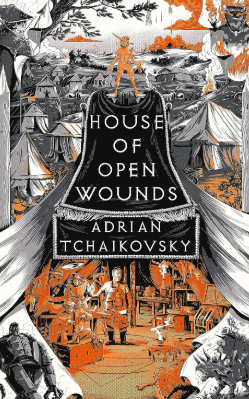
In House of Open Wounds, the author chose to concentrate on the bloody day-to-day activities of a field hospital, so all the POVs are concentrated in or around the Butcher’s domain. This gives the story a lot more focus as well as lets the reader truly get to know and care for the characters. I grew to love them and hope for a happy ending for them, even if their prospects were bleak – they were magic users and priests of old gods in the middle of a Palleseen army, after all.
The only character to carry over from the first book is Yasnic, one-time priest of a healing god, and now self-appointed god-smuggler. However, even he underwent a subtle transformation in this book, where he goes by Maric Jack instead of Yasnic. I like him a lot better in this story than in the first one, because he seems to have a lot more agency. He is less whiny, and he shows depths of compassion that he wasn’t capable of in the first book. And he becomes, almost despite himself, the catalyst to all the events that happen in the book.
The other members of the Butcher’s menagerie are just as strange and broken, but also very endearing. I loved the two elderly priests of formerly rival gods who discovered that even though their religions had been eradicated, they still had each other. Or the long-lost heir to a kingdom who lived his whole life as an orderly… Heck, I loved all of them, even the very Palleseen necromancer who is unwillingly in charge of the whole experimental hospital.
The daily life in the Butcher’s domain is brutal and bloody, and even though we don’t get to see the war directly, we get more than enough of it in the wounds the hospital has to treat and the horrors that become their everyday routine.
I also really liked how this ended. That was such an elegant solution that used Yasnic’s God’s powers and loopholes and still managed to bring a little bit of justice into this brutal and unjust war.
PS: My thanks to NetGalley for my review copy.