
Stars: 4.5 out of 5
I can shamelessly admit that I’ve been a fan of Robert Jackson Bennett ever since I read City of Stairs. The Divine Cities trilogy showcased his wonderfully strange imagination and unmatched skill with words. He has a talent for creating bizarre, fantastical worlds that nevertheless feel believable, and then populating them with characters you can’t help but love—or hate. The Shadow of the Leviathan series is proving to be another outstanding addition to his catalog.
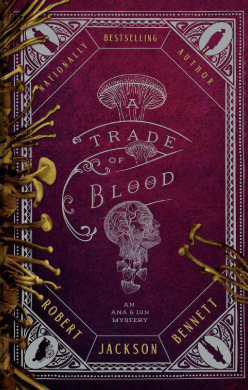
This installment takes us into yet another corner of the Empire, far removed from the walls and the paths of the Leviathans. At its core, it’s a compelling murder mystery that kept me engaged from beginning to end. It also feels more tightly written than its predecessor, with every scene driving the story forward. There’s far less meandering and fewer side plots than we saw in A Drop of Corruption.
A few aspects of this book genuinely kept me awake at night. The concept of an autopsy performed by vegetation was unsettling enough, but the mind-control fungus was pure nightmare fuel. Every time I read this series, I’m reminded of how fascinating this world is—and how absolutely unwilling I would be to live in it. It’s an unforgiving place, steeped in an almost casual cruelty.
Din experiences significant personal growth in this book and finally manages to move beyond the rut he found himself in during book two.
I think coming face to face with his sister and having to look back at his past helped put things into perspective for him. That and the fact that his engraver gift is maturing faster than he expected. Admittedly, this also made for a much more embittered and pessimistic Din.
I also enjoyed seeing how Din’s relationship with Ana has evolved into something resembling genuine friendship. They understand each other, respect each other, and work together far more effectively than they once did.
This book felt darker than the previous installments, likely because of the themes it explores. It also paints the Empire in a much gloomier light. By the end, I found myself asking the same question Din does: is the Empire really worth defending?
I can’t wait to get the next book in the series and see where Din and Ana’s adventures will take them next.
PS: My thanks to NetGalley for providing me with a review copy.